


The LAPERO.com playlist CHANSON FRANCAISE - LES CLASSIQUES gathers 300 classic French songs, from Édith Piaf to Angèle, and you can play it on Spotify, Deezer and YouTube Music. It runs from La vie en rose (1947) to Le Dernier Jour du Disco (2021). This page explains what is in it, says in a few words who each artist is, gives years and albums for a selection of tracks, and sets out a ready-to-play music quiz.


French chanson playlist: 300 classic French songs picked by LAPERO
What is in the LAPERO French chanson playlist?
Three hundred songs in French, shuffled rather than sorted by date. The playlist opens with Hymne à l'amour ("Hymn to Love") sung by Céline Dion at the Paris 2024 Olympic Games, followed by Love Me, Please Love Me by Michel Polnareff, La groupie du pianiste ("The Pianist's Groupie") by Michel Berger and Ta reine ("Your Queen") by Angèle. Four tracks, four eras.
You will find the post-war voices (Piaf, Brel, Ferré, Aznavour, Jean Ferrat, Claude Nougaro), the generation of the 1960s and 1970s (Françoise Hardy, Jacques Dutronc, Joe Dassin, Claude François, Michel Polnareff, Michel Sardou), the 1980s of Berger, France Gall, Balavoine, Goldman, Indochine and Daho, then Cabrel, Souchon, Céline Dion, Obispo, Zazie and Calogero, and finally Stromae, Angèle, Juliette Armanet and Julien Doré.
The table below places thirteen songs from the playlist: performer, release year and original album.
| Song | Artist | Year | Album |
|---|---|---|---|
| La vie en rose | Édith Piaf | 1947 | Single (Columbia) |
| Ne me quitte pas | Jacques Brel | 1959 | La Valse à mille temps |
| Tous les garçons et les filles | Françoise Hardy | 1962 | Tous les garçons et les filles |
| Les Champs-Élysées | Joe Dassin | 1969 | Joe Dassin (Les Champs-Élysées) |
| Avec le temps | Léo Ferré | 1971 | Non-album single (Barclay) |
| Cette année-là | Claude François | 1976 | Le Vagabond |
| Je vais t'aimer | Michel Sardou | 1976 | La Vieille |
| Il jouait du piano debout | France Gall | 1980 | Paris, France |
| Je marche seul | Jean-Jacques Goldman | 1985 | Non homologué |
| Foule sentimentale | Alain Souchon | 1993 | C'est déjà ça |
| J'ai demandé à la lune | Indochine | 2002 | Paradize |
| Alors on danse | Stromae | 2009 | Cheese |
| Le Dernier Jour du Disco | Juliette Armanet | 2021 | Brûler le feu |
If you like the format, LAPERO also has a French rap classics playlist and a selection of 150 rock classics.
From Piaf to Angèle: which eras does the playlist cover?
The founders: Piaf, Brel, Ferré, Aznavour
Édith Piaf (1915 to 1963), the Paris-born singer and lyricist, wrote the words of La vie en rose ("Life in Pink") in 1945, to music by Louiguy. The single came out in 1947 and the recording entered the Grammy Hall of Fame in 1998. La foule ("The Crowd", 1957) is a French adaptation of Que nadie sepa mi sufrir. She wrote Hymne à l'amour, with music by Marguerite Monnot, for the boxer Marcel Cerdan and recorded it on 2 May 1950. The playlist has Céline Dion's version, sung on 26 July 2024 from the first floor of the Eiffel Tower to close the opening ceremony of the Paris Games.
Jacques Brel, a Belgian singer-songwriter, first performed Ne me quitte pas ("Don't Leave Me") in 1959. It appears on the album La Valse à mille temps and was adapted into English by Rod McKuen as If You Go Away.
Léo Ferré wrote Avec le temps ("With Time") in 1969 and recorded it in October 1970 during the sessions for the second volume of Amour Anarchie. His label Barclay left it off the album and issued it as a single in 1971.
Charles Aznavour (1924 to 2018), a Paris-born French-Armenian singer, owes his breakthrough to Je m'voyais déjà ("I Could Already See Myself"). Yves Montand had turned it down, and Aznavour sang it with his back to the audience at the Alhambra theatre. It is the title track of an album released in 1961.
The 1960s and 1970s: yé-yé pop, adaptations and popular voices
Françoise Hardy (1944 to 2024), a singer-songwriter from Paris, was 18 when she recorded her own song Tous les garçons et les filles ("All the Boys and Girls") on 25 April 1962 for the Vogue label. The wider public discovered her on Sunday 28 October 1962, in a musical interlude during the television coverage of a referendum night. Her other track in the playlist, Le temps de l'amour ("The Time of Love"), has music by Jacques Dutronc, the singer she married in 1981. Dutronc released Il est cinq heures, Paris s'éveille ("It's Five O'Clock, Paris Is Waking Up") in March 1968, with a flute solo improvised in a single take by Roger Bourdin.
France Gall won the Eurovision Song Contest in Naples on 20 March 1965 with Poupée de cire, poupée de son ("Wax Doll, Rag Doll"), written and composed by Serge Gainsbourg. She was representing Luxembourg.
Several hits of the period are adaptations. Les Champs-Élysées (1969) by Joe Dassin, a New York-born American-French singer, reworks Waterloo Road, a British song from 1968, with lyrics by Pierre Delanoë. Cette année-là ("That Year", 1976) by Claude François adapts December, 1963 (Oh, What a Night) by the Four Seasons, with words by Eddy Marnay that move the memory to 1962. Paroles… paroles… ("Words… Words…", 1973), by the singer Dalida with the actor Alain Delon, comes from the Italian Parole parole (1972). Francis Cabrel, a singer-songwriter, dedicated Petite Marie (1977, album Les Murs de poussière) to his wife Mariette.
The 1980s: Berger, Balavoine, Goldman and new wave
In 1980 Michel Berger, a singer and songwriter, released La groupie du pianiste on the album Beauséjour, with France Gall on backing vocals. He wrote Il jouait du piano debout ("He Played the Piano Standing Up") for her, on the album Paris, France: a tribute to Jerry Lee Lewis and his way of playing on his feet. Daniel Balavoine released Mon fils ma bataille ("My Son, My Battle"), inspired in part by the film Kramer vs. Kramer. Two numbers from Starmania, the rock opera Berger composed to a libretto by Luc Plamondon (first album released in October 1978), are also in the playlist.
Indochine, a pop-rock band formed in Paris in 1981 by Nicola Sirkis and Dominique Nicolas, recorded L'aventurier ("The Adventurer"), which refers to Bob Morane, the hero created by the Belgian novelist Henri Vernes. The album of the same name was released in 1982. Étienne Daho, a pop singer-songwriter, had his first big hit with Week-end à Rome, from the album La notte, la notte (March 1984): the Italian lines are sung by Lio. Jean-Jacques Goldman, a Paris-born singer-songwriter and guitarist, released Je marche seul ("I Walk Alone") in June 1985. It reached number two on the Top 50, the French singles chart.
The 1990s and 2000s: Souchon, Obispo, Zazie, Calogero
Foule sentimentale ("Sentimental Crowd") by Alain Souchon (1993, album C'est déjà ça) won Song of the Year at the 1994 Victoires de la musique, the French music awards. Pascal Obispo recorded Lucie in 1996 for the album Superflu. Céline Dion, the singer from Quebec, released the album S'il suffisait d'aimer ("If Loving Were Enough") in 1998, most of it written by Jean-Jacques Goldman, then sang Sous le vent ("Downwind") with Garou in 2001.
Zazie released Rue de la Paix in 2001 (album La Zizanie). In 2002 Indochine returned with J'ai demandé à la lune ("I Asked the Moon", album Paradize), written by Mickaël Furnon, the singer of Mickey 3D: the single reached number one in France in July 2002. Calogero and Passi shared Face à la mer ("Facing the Sea") in 2004.
Since 2009: Stromae, Angèle, Julien Doré, Juliette Armanet
The Belgian singer, rapper and producer Stromae released Alors on danse ("So We Dance") in September 2009, ahead of the album Cheese, released on 14 June 2010. It topped the sales charts in France, Germany, Belgium and Switzerland. Julien Doré released Paris-Seychelles on 12 July 2013 as the first single from the album Løve. Angèle, also Belgian, included Ta reine on her first album Brol (5 October 2018), which won Breakthrough Album at the 2019 Victoires de la musique. Juliette Armanet wrote and composed Le Dernier Jour du Disco ("The Last Day of Disco"), released on 17 September 2021 ahead of the album Brûler le feu.
As a quick guide, here is one song from the playlist for each decade.
| Decade | Song | Artist | Year |
|---|---|---|---|
| 1940s | La vie en rose | Édith Piaf | 1947 |
| 1950s | La foule | Édith Piaf | 1957 |
| 1960s | Poupée de cire, poupée de son | France Gall | 1965 |
| 1970s | Petite Marie | Francis Cabrel | 1977 |
| 1980s | L'aventurier | Indochine | 1982 |
| 1990s | Lucie | Pascal Obispo | 1996 |
| 2000s | Rue de la Paix | Zazie | 2001 |
| 2010s | Paris-Seychelles | Julien Doré | 2013 |
| 2020s | Hymne à l'amour (live, Paris 2024) | Céline Dion | 2024 |
Where can you listen to the playlist?
The playlist is on Spotify, Deezer and YouTube Music under the name "CHANSON FRANCAISE - LES CLASSIQUES", by LAPERO.com. The buttons at the top of the page take you straight there, and the player below lets you start listening without leaving the article.
How do you turn it into a music quiz?
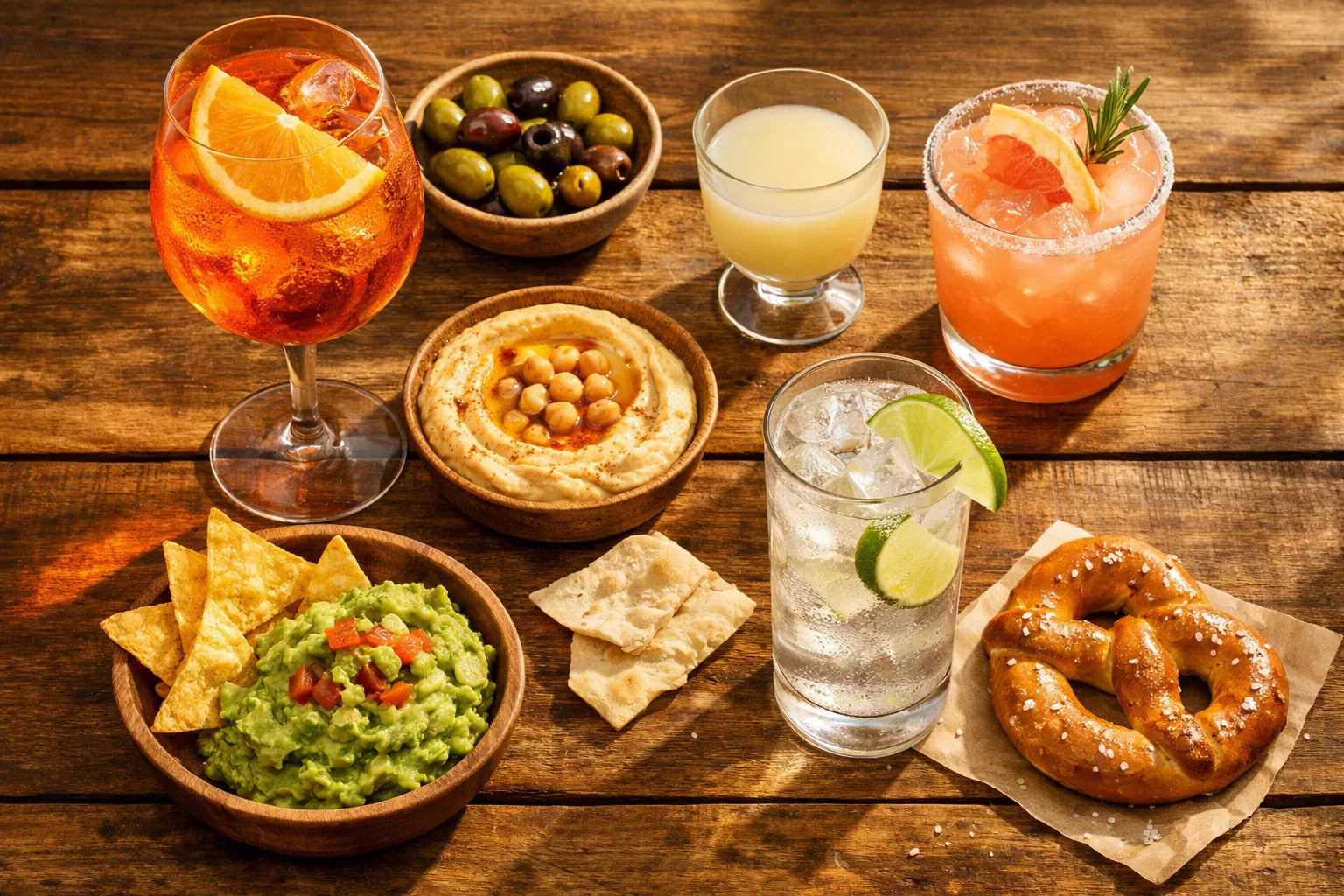
In France, a name-that-tune quiz is called a "blind test", and it is a regular feature of the apéro, the drinks and snacks shared before dinner. Three hundred tracks are more than enough for one evening. The simplest plan: five rounds of six clips, thirty songs in all, and keep the rest for the rematch.
- Teams: two to four players each, mixing generations if you can. If your guests are new to French music, play each chorus twice.
- The quizmaster: one person holds the phone, screen hidden, and plays each clip for 20 seconds.
- Scoring: one point for the title, one for the performer, then bonus points that rise with each round.
| Round | Level | How it works | Examples from the playlist |
|---|---|---|---|
| 1. Choruses | Easy | Name the song and the singer within 20 seconds | Les Champs-Élysées, Alors on danse, J'ai demandé à la lune |
| 2. Duets | Easy | Name both voices | Sous le vent, Manhattan-Kaboul, Paroles… paroles… |
| 3. Years | Medium | Give the release year, within two years | Cette année-là (1976), Je marche seul (1985), Foule sentimentale (1993) |
| 4. Adaptations | Hard | Name the foreign song it was adapted from | Les Champs-Élysées, Cette année-là, La foule |
| 5. Writers | Expert | Say who wrote or composed it | Poupée de cire, poupée de son, Il jouait du piano debout, Le temps de l'amour |
Answers for round 4: Waterloo Road for Les Champs-Élysées, December, 1963 (Oh, What a Night) by the Four Seasons for Cette année-là, Que nadie sepa mi sufrir for La foule. Answers for round 5: Serge Gainsbourg, Michel Berger, and Jacques Dutronc for the music of Le temps de l'amour.
FAQ: the classic French songs playlist
How many songs are in the LAPERO French chanson playlist?
The LAPERO.com playlist "CHANSON FRANCAISE - LES CLASSIQUES" has 300 tracks on Spotify and 300 on Deezer, as checked on 3 October 2026. It covers French-language song from Édith Piaf, Jacques Brel, Léo Ferré and Charles Aznavour to Stromae, Angèle, Julien Doré and Juliette Armanet.
Where can I listen to the French classics playlist?
The LAPERO.com playlist "CHANSON FRANCAISE - LES CLASSIQUES" is available on Spotify, Deezer and YouTube Music. The buttons at the top of this page open it on each platform, and a Spotify player is embedded in the article, so you can start listening straight away.
What are the most famous French songs in this playlist?
Songs in the LAPERO playlist include La vie en rose by Édith Piaf (1947), Ne me quitte pas by Jacques Brel (1959), Les Champs-Élysées by Joe Dassin (1969), Cette année-là by Claude François (1976), Je marche seul by Jean-Jacques Goldman (1985), Foule sentimentale by Alain Souchon (1993) and Alors on danse by Stromae (2009).
Which French songs work best for a music quiz?
For a French music quiz, start with well-known choruses such as Les Champs-Élysées by Joe Dassin, Alors on danse by Stromae or J'ai demandé à la lune by Indochine. Then raise the difficulty with release years and with adaptations: Cette année-là by Claude François is a French version of December, 1963 (Oh, What a Night) by the Four Seasons.
Which English song is Les Champs-Élysées by Joe Dassin based on?
Les Champs-Élysées, released by Joe Dassin in 1969, is a French adaptation of Waterloo Road, a British song from 1968. The French lyrics are by Pierre Delanoë. The song is in the LAPERO French chanson playlist, along with Dassin's Et si tu n'existais pas and Dans les yeux d'Émilie.
What did Céline Dion sing at the Paris 2024 Olympics?
Céline Dion sang Édith Piaf's Hymne à l'amour at the end of the opening ceremony of the Paris Olympic Games on 26 July 2024, from the first floor of the Eiffel Tower, accompanied by pianist Scott Price. That live recording is part of the LAPERO.com French chanson playlist.
Last updated:
Conclusion
With 300 tracks, the LAPERO.com playlist CHANSON FRANCAISE - LES CLASSIQUES runs from La vie en rose (1947) to Céline Dion's voice on the Eiffel Tower in 2024. Put it on shuffle, bring out something to nibble and keep score.
Sources: Spotify, Wikipedia, La Vie en rose, Wikipedia, Avec le temps, Wikipedia, Cette année-là, Wikipedia, J'ai demandé à la lune, Wikipedia, 2024 Summer Olympics opening ceremony.



















Share: